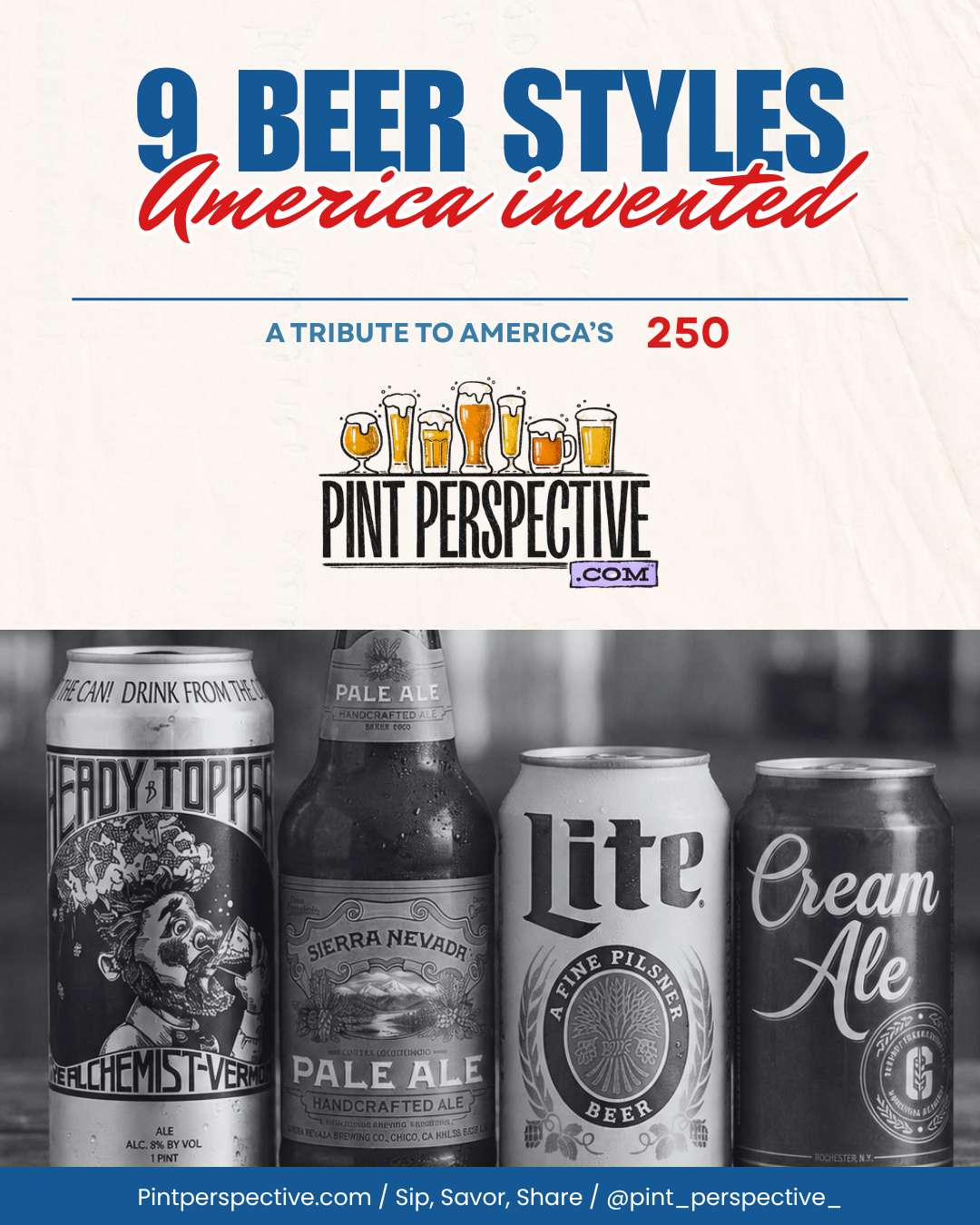
9 Beer Styles America Actually Invented — A 250th Anniversary Tribute
This year marks 250 years since America declared its independence, and if there's one thing this country has never stopped doing since, it's putting its own spin on things it borrowed from somewhere else. Beer is no exception. We took English ales and German lagers and, over the course of two and a half centuries, turned them into something else entirely.
So in honor of the Semiquincentennial, here's a rundown of nine beer styles that are 100% American-born — from Gold Rush-era survivors to the hazy stuff currently taking up three shelves at your local bottle shop.
1. New England IPA (NEIPA)
The History: The NEIPA emerged in the early 2010s out of breweries in the northeastern U.S. The Alchemist and its now-legendary Heady Topper are widely credited with kicking the style into the mainstream, with Tree House and Trillium helping push it further into the spotlight.
What to Expect: Hazy, almost opaque in the glass, with a soft, pillowy mouthfeel and low bitterness compared to its West Coast cousins. Expect a wall of tropical fruit — mango, pineapple, peach, citrus — up front.
Why It Matters: The NEIPA didn't just add a new option to the menu — it rewrote what people expect an IPA to taste like. Arguably the most influential American beer style of the last decade.
2. Black IPA
The History: Born in the Pacific Northwest during the '90s and 2000s, Black IPA was brewers' answer to a simple question: what if a stout and an IPA had a baby? Some regions still call it "Cascadian Dark Ale."
What to Expect: Dark brown to black, with citrus and pine hop aromas riding on top of moderate roast character and a dry finish.
Why It Matters: It proved a dark beer could be genuinely hop-forward without turning into a stout or porter — a lane nobody had really explored before.
3. Cream Ale
The History: Dating back to the late 1800s, Cream Ale was American ale brewers' attempt to compete with the lager boom, especially in the Northeast and Midwest.
What to Expect: Light-bodied, clean, and crisp, with mild malt sweetness. It's fermented like an ale but cold-conditioned like a lager — a genuine hybrid. Usually 4–6% ABV.
Famous Example: Genesee Cream Ale remains the style's most recognizable ambassador.
Why It Matters: It's one of the oldest surviving native American beer styles — still on shelves after nearly 150 years.
4. Kentucky Common
The History: This one belongs to Louisville, where it originated in the late 1800s and, before Prohibition, made up a serious chunk of the city's total beer output.
What to Expect: Amber to brown, with moderate malt sweetness, common use of corn adjuncts, a light roast character, and an easy-drinking, sessionable profile.
What Happened? Prohibition all but erased it. Craft brewers have since brought it back as a deliberate nod to brewing history.
Why It Matters: It's one of the only beer styles that can claim to be truly native to one specific American city.
5. California Common ("Steam Beer")
The History: Born during the California Gold Rush, when brewers without access to refrigeration fermented lager yeast at warmer-than-usual temperatures out of necessity, not choice.
What to Expect: A toasty malt profile, moderate bitterness, crisp finish, and amber color — a genuine ale/lager hybrid.
Famous Example: Anchor Brewing Company's Anchor Steam Beer is the style's modern standard-bearer.
Why It Matters: Steam Beer is basically frontier ingenuity in a glass — brewers making do with what they had and inventing a whole style in the process.
6. American Light Lager
The History: After Prohibition, large American breweries leaned hard into lighter, easier-drinking lagers. By the late 20th century, this style dominated the market completely.
What to Expect: Very light body, low bitterness, high carbonation, and a clean finish, typically in the 4–4.5% ABV range.
Examples: Bud Light, Coors Light, Miller Lite.
Why It Matters: Craft beer fans love to roll their eyes at it, but it remains the single most consumed beer style in American history. You don't get to ignore that on a 250th birthday list.
7. American Pale Ale (APA)
The History: Largely defined in 1980, when Sierra Nevada Brewing Co. released its now-iconic Pale Ale.
What to Expect: Citrus and pine hop aroma, moderate bitterness, and a balanced malt backbone, usually landing in the 5–6% ABV range.
Why It Matters: The APA effectively launched the modern American craft beer movement — and, by extension, everything else on this list that came after 1980.
8. Pastry Beer
The History: One of the newest entries here, pastry beer took off in the 2010s as brewers started building dessert-inspired stouts and ales loaded with adjuncts.
What to Expect: Think cake, cookies, donuts, candy, ice cream — often at a serious ABV, with a sweet, rich body built from ingredients like vanilla, chocolate, coconut, marshmallow, and coffee.
Why It Matters: Love it or hate it, pastry beer is proof that American brewers still haven't run out of ways to push a style somewhere new.
9. American Barleywine
The History: American brewers took the traditional English Barleywine and cranked up the hop character during the craft beer boom of the '80s and '90s.
What to Expect: 8–15% ABV, rich caramel and toffee flavors, a heavy American hop presence, and a beer that generally gets better with age.
Famous Examples: Sierra Nevada Bigfoot and Anchor Brewing's Old Foghorn.
Why It Matters: American Barleywine helped cement this country's reputation for going bigger and bolder than the traditions it borrowed from.
The Big Picture
Line these nine up and you get a pretty good snapshot of American brewing history itself:
Historic survivors: Cream Ale, Kentucky Common, California Common
Craft beer pioneers: American Pale Ale, American Barleywine
Modern innovations: Black IPA, New England IPA, Pastry Beer
Mass-market influence: American Light Lager
Two hundred fifty years in, the throughline is the same one running through the rest of American history: we didn't just adopt what came before us — we took it apart and built something new. Beer's no different. 🍻🇺🇸
Raise a glass to 250 years — and to the brewers who keep proving American beer isn't just an import with a new label on it.